A sudden twinge, a sharp pain, or a nagging ache in the back of your thigh—for any footballer or runner, a hamstring injury is a dreaded and all-too-common setback. It can sideline you for weeks, disrupt your training schedule, and undermine your confidence. But what if you could shift your focus from recovery to resilience? The most effective strategy against hamstring injuries isn't just rest; it's building robust, powerful hamstrings that can withstand the explosive demands of your sport. This guide provides five essential, evidence-based exercises designed to bulletproof your hamstrings, helping you stay on the pitch, on the track, and at the top of your game.

Exercise 1: The Nordic Hamstring Curl
Often called the gold standard for hamstring injury prevention, the Nordic Hamstring Curl is a powerhouse for building eccentric strength. Eccentric strength is the muscle's ability to lengthen under tension, which is exactly what happens when your leg swings forward during a sprint before your foot hits the ground. This controlled lengthening is where hamstrings are most vulnerable. By strengthening this specific phase, you significantly reduce the risk of strains and tears.
How to perform it:
- Kneel on a padded surface with a partner holding your ankles firmly to the floor. You can also anchor your feet under a stable, low piece of gym equipment.
- Keep your body in a straight line from your knees to your head, engaging your glutes and core.
- Slowly lower your torso towards the floor, using your hamstrings to control the descent for as long as possible.
- When you can no longer control the movement, gently catch yourself with your hands.
- Push off the floor to help return to the starting position. Avoid using your hamstrings to pull yourself back up initially; the main work happens on the way down.
Exercise 2: Single-Leg Romanian Deadlifts (RDLs)
Running and football are single-leg activities at their core. The Single-Leg RDL is a fantastic exercise because it challenges the hamstring through its full range of motion while also improving balance, hip stability, and neuromuscular control. It strengthens the entire posterior chain (hamstrings, glutes, and lower back) and teaches your body to maintain a stable pelvis during dynamic movements, which is critical for efficient sprinting and changing direction.
How to perform it:
- Stand on one leg, holding a dumbbell or kettlebell in the opposite hand for counterbalance.
- Keep a slight bend in your standing knee. Hinge at your hips, extending the non-standing leg straight back behind you.
- Lower the weight towards the floor, keeping your back straight and your hips level. You should feel a deep stretch in the hamstring of your standing leg.
- Go as low as you can without rounding your back, then drive your hips forward and squeeze your glutes to return to the starting position.
- Complete all reps on one side before switching.
Exercise 3: Glute Bridges & Hip Thrusts
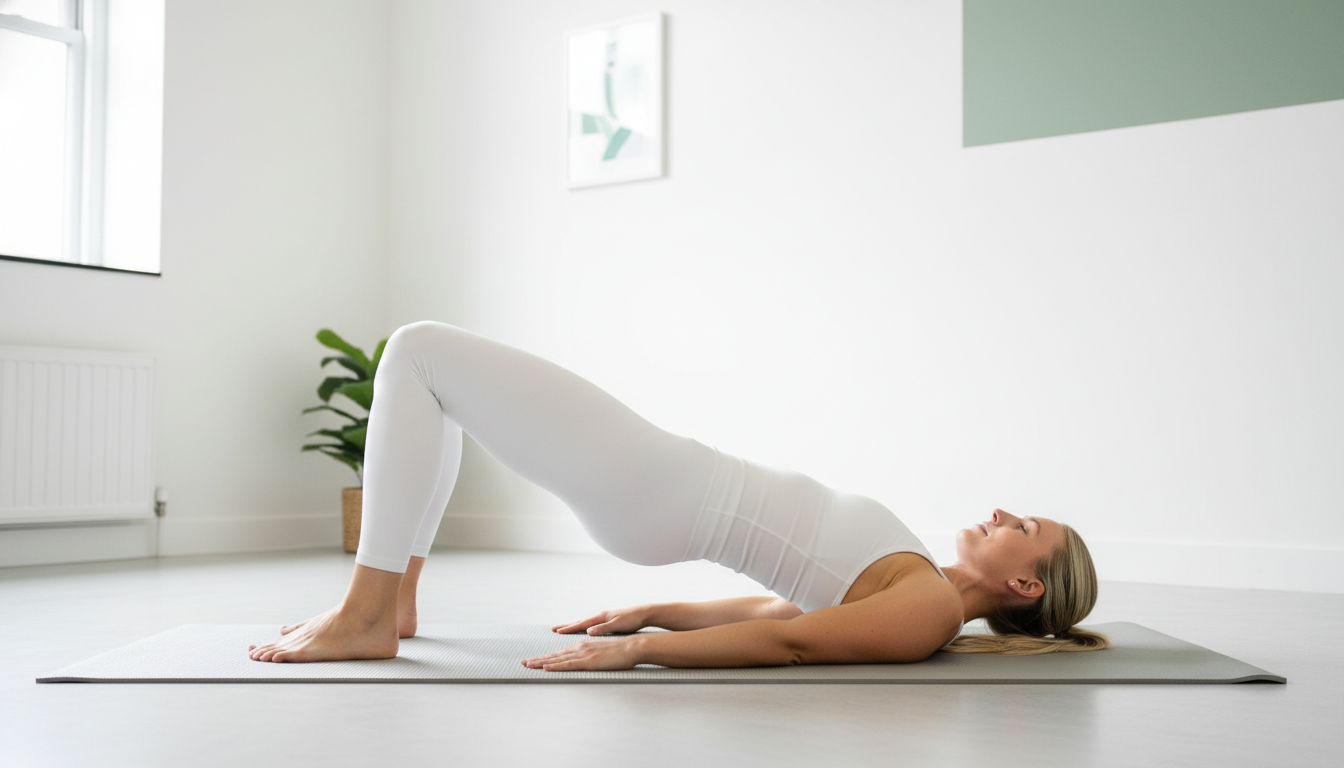
Your hamstrings don't work in isolation. Often, they become strained because they are overcompensating for weak or inactive glutes. Your glutes are the most powerful muscles in your body and should be the primary driver of hip extension. When they don't fire properly, the hamstrings take on the extra load, leading to fatigue and injury. Glute Bridges and their weighted counterpart, Hip Thrusts, directly target and strengthen your glutes, teaching them to do their job effectively and giving your hamstrings a much-needed break.
How to perform it (Glute Bridge):
- Lie on your back with your knees bent, feet flat on the floor about hip-width apart, and your arms by your sides.
- Engage your core and squeeze your glutes to lift your hips off the floor until your body forms a straight line from your shoulders to your knees.
- Pause at the top, focusing on the glute contraction, before slowly lowering your hips back to the start.
Exercise 4: Copenhagen Planks
While we focus heavily on the hamstrings themselves, the surrounding muscles play a vital supportive role. The adductors (inner thigh muscles) work in close partnership with the hamstrings, and weakness here can increase injury risk. The Copenhagen Plank is a challenging but highly effective exercise for strengthening the adductors and improving core and hip stability. A strong, stable core and pelvis provide a solid foundation for your legs to generate force, reducing unnecessary strain on your hamstrings.
How to perform it:
- Lie on your side, propped up on your elbow, with your top leg resting on a bench or sturdy chair.
- Place your bottom leg underneath the bench.
- Engage your core and lift your hips off the floor, pressing your top leg into the bench. Your body should form a straight line.
- For an added challenge, lift your bottom leg up to meet the bench.
- Hold this position for the prescribed time.
How to Integrate These Into Your Routine
Consistency is more important than intensity. Adding these exercises to your routine 2-3 times per week can make a significant difference. Listen to your body and focus on perfect form over heavy weight or high reps. Here’s a sample progression:
- **Nordic Hamstring Curls:** Start with 2 sets of 5-6 reps, focusing on a slow, controlled descent. Use as much assistance as needed to return to the top.
- **Single-Leg RDLs:** Begin with 3 sets of 8-10 reps per leg, using light weight or just your bodyweight to master the movement pattern.
- **Glute Bridges:** Aim for 3 sets of 15-20 reps. To progress, move to single-leg bridges or add weight across your hips for Hip Thrusts.
- **Copenhagen Planks:** Start with 3 sets of holding for 15-20 seconds per side. Gradually increase the hold time as you get stronger.
Always perform these exercises as part of a comprehensive training program, ensuring you warm up properly beforehand and cool down afterwards.
Conclusion: Build a Stronger Foundation to Stay in the Game
Building resilient hamstrings is an ongoing commitment, not a one-time fix. By integrating these essential exercises into your training, you're not just getting stronger; you're making a smart investment in your athletic future. You're building a foundation that can handle the demands of every sprint, tackle, and long-distance run. However, every athlete is unique, and a generic plan may not address your specific imbalances or history. If you're tired of recurring injuries or want a personalised strategy to ensure you can recover, move, and perform at your best, it's time to consult an expert. Let our team at Resync Physiotherapy in Balsall Common create a clear, evidence-based plan tailored to your body and your goals. Book your initial assessment with us today and take the first confident step towards leaving hamstring worries behind for good.