Introduction: The Fear of the Recurrent Hamstring Strain
For any runner or footballer, the sharp, sudden pain of a hamstring strain is a dreaded feeling. But what’s even more frustrating is the cycle that often follows: weeks of careful rest and rehabilitation, a cautious return to the sport you love, and then—another twinge. This injury-recovery-reinjury loop can be mentally and physically draining, leaving you questioning your body's resilience. The good news is that you can break this cycle. The key isn't just to heal the injury, but to build robust, resilient hamstrings that can handle the explosive demands of your sport. This guide provides five targeted exercises designed to do exactly that, helping you stay on the pitch or the track for good.
Understanding Why Hamstrings Get Injured
Your hamstrings are a powerful group of three muscles that run down the back of your thigh. They are crucial for explosive movements like sprinting and kicking. A primary cause of injury occurs during the eccentric phase of muscle contraction—that is, when the muscle is lengthening under tension. Think of your leg swinging forward just before your foot strikes the ground when running. Your hamstring acts as a brake to control this motion. If it's not strong enough to handle that braking force, or if it’s fatigued, it can lead to microscopic tears, which we know as a strain. Furthermore, if other muscles like your glutes are weak, your hamstrings can become overloaded as they try to compensate, making them highly susceptible to injury.
Exercise 1: The Nordic Hamstring Curl
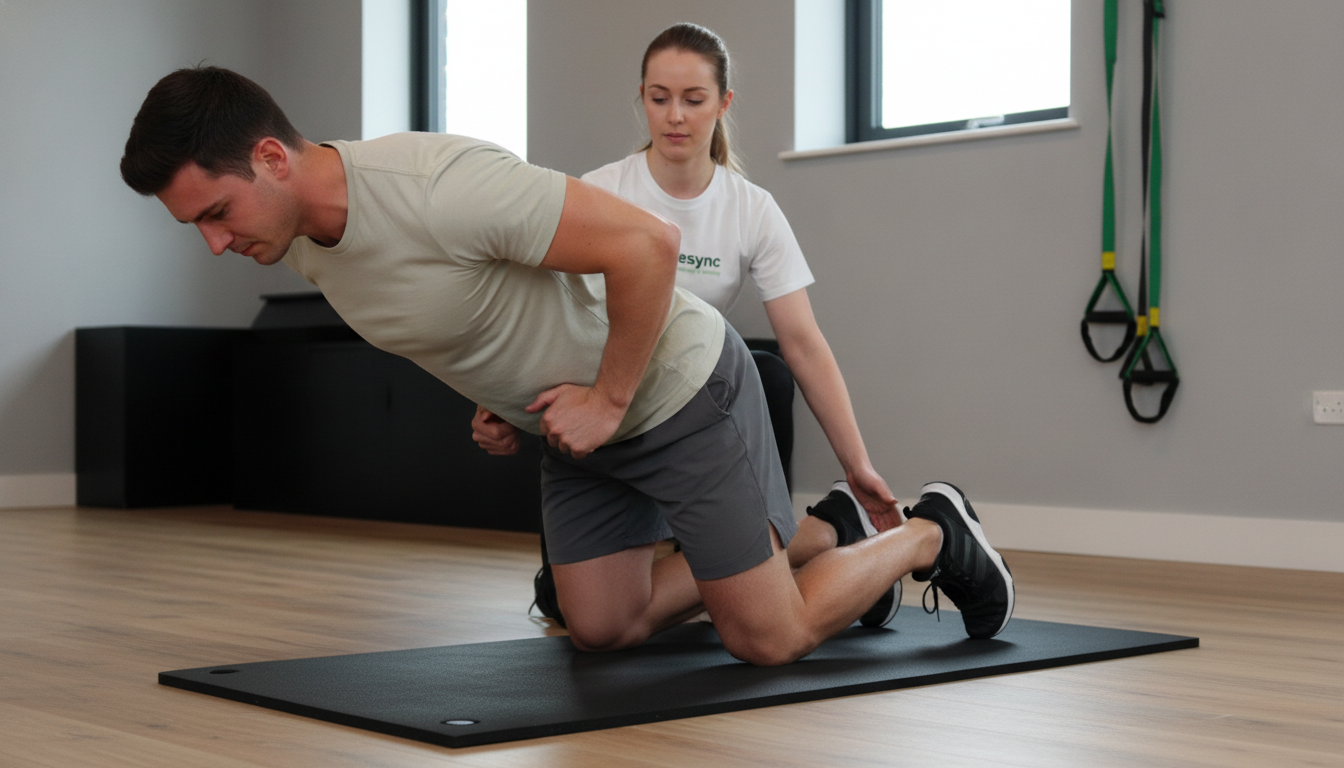
The Nordic Hamstring Curl is a powerhouse for building eccentric strength—exactly the kind of strength needed to prevent strains during sprinting and deceleration. It specifically targets the hamstring's ability to act as a brake. This exercise requires a partner or a very stable anchor for your ankles.
How to perform it:
Kneel on a padded surface with your ankles held securely by a partner or hooked under a stable object (like a weighted barbell).
Keep your body in a straight line from your knees to your head, with your core engaged.
Slowly lower your torso towards the floor, using your hamstrings to control the entire movement. Go as slowly as you can.
When you can no longer control the descent, catch yourself with your hands and gently push back up to the starting position. Avoid using your hamstrings to pull yourself back up initially; the focus is on the lowering phase.
Aim for 2-3 sets of 5-8 repetitions.
Exercise 2: The Single-Leg Romanian Deadlift (RDL)
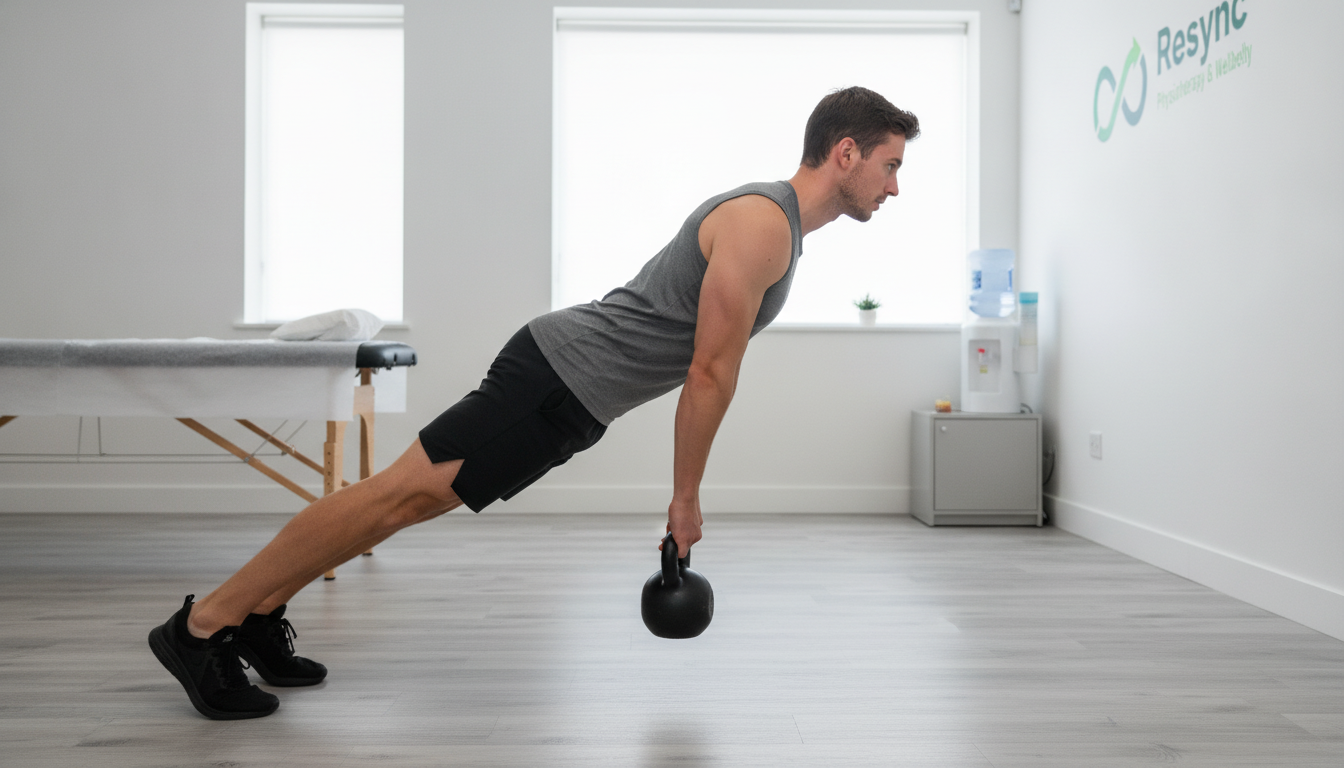
This exercise is fantastic for developing hamstring strength, length, and balance all at once. By working one leg at a time, you challenge your stability and proprioception, which is crucial for the dynamic, unilateral movements found in running and football. It strengthens the entire posterior chain, from your glutes to your hamstrings.
How to perform it:
Stand on one leg, holding a dumbbell or kettlebell in the opposite hand for counterbalance (optional, can be done with bodyweight).
Keeping a very slight bend in your standing knee, hinge forward at your hips, extending your other leg straight back behind you.
Maintain a flat back and keep your hips level throughout the movement. Lower the weight (or your hand) towards the floor until you feel a good stretch in your standing hamstring.
Squeeze your glute and hamstring to pull your torso back up to the starting position.
Complete 3 sets of 8-12 repetitions on each leg.
Exercise 3: Glute Bridges
Strong glutes are a hamstring's best friend. When your glutes are not firing correctly, the hamstrings are forced to take on more of the load during hip extension, leading to fatigue and a higher risk of injury. Glute bridges directly target your gluteal muscles, teaching them to activate properly and reducing the strain on your hamstrings.
How to perform it:
Lie on your back with your knees bent, feet flat on the floor about hip-width apart, and your arms by your sides.
Engage your core and squeeze your glutes to lift your hips off the floor until your body forms a straight line from your shoulders to your knees.
Pause at the top, focusing on the glute contraction, and ensure you are not arching your lower back.
Slowly lower your hips back to the starting position.
For a greater challenge, progress to a single-leg glute bridge. Perform 3 sets of 12-15 repetitions.

Exercise 4: The Eccentric Bridge (Hamstring Walkout)
Building on the glute bridge, this variation introduces an eccentric component that specifically targets the hamstrings' braking mechanism. It’s an excellent way to improve your hamstrings' endurance and control under tension, directly translating to better injury prevention on the field.
How to perform it:
Start in the top position of a standard glute bridge, with your hips high and glutes engaged.
Keeping your hips elevated, slowly 'walk' your feet forward in small steps.
Continue walking out until your legs are almost straight, or as far as you can control without your hips dropping.
From this extended position, walk your feet back to the starting position, maintaining hip height throughout.
Aim for 3 sets of 6-8 full walkouts.
Exercise 5: Kettlebell Swings
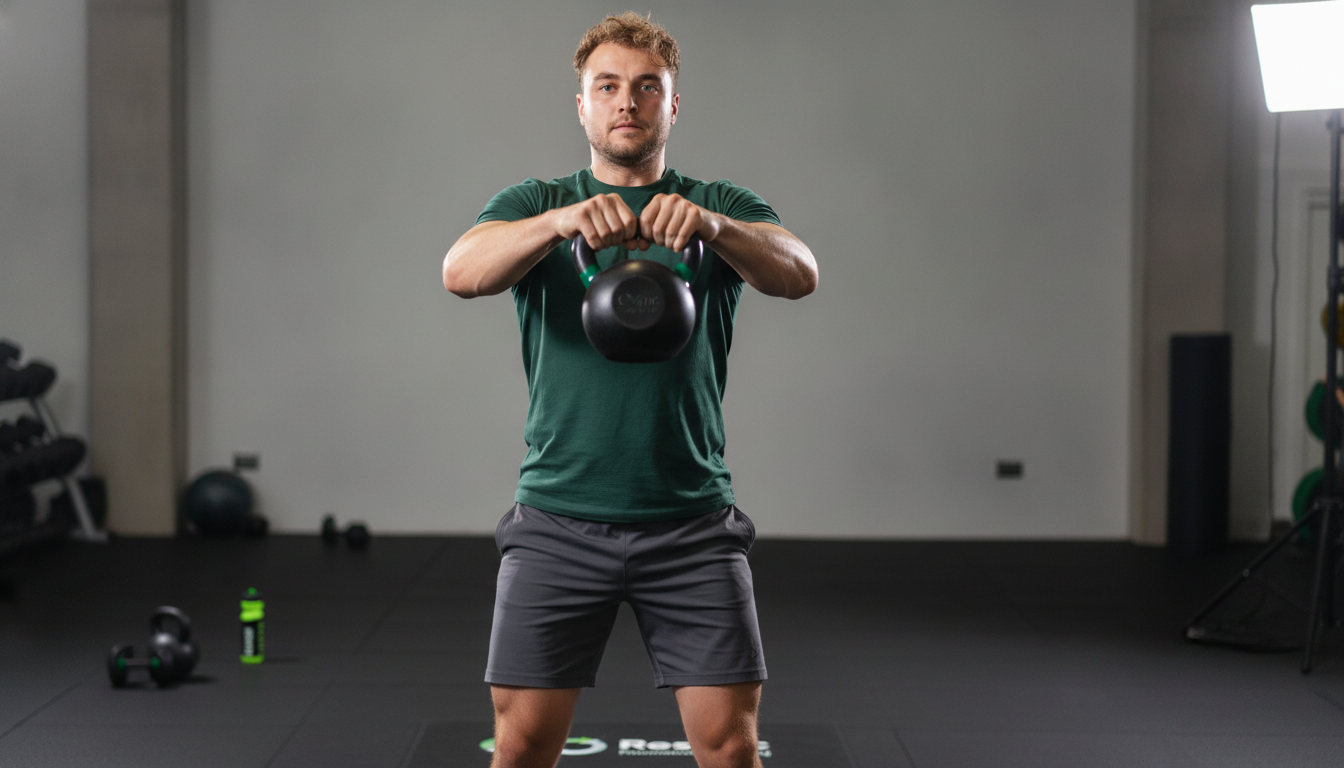
Once you've built a solid foundation of strength, the kettlebell swing is an exceptional exercise for developing explosive power and resilience in the hamstrings and glutes. This dynamic movement teaches you to generate force from your hips, which is the key to powerful sprinting and kicking, all while conditioning the hamstrings to handle rapid cycles of contraction and lengthening.
How to perform it:
Stand with your feet slightly wider than shoulder-width apart, with a kettlebell about a foot in front of you.
Hinge at your hips, keeping your back straight, and grab the kettlebell with both hands.
Hike the kettlebell back between your legs, then forcefully drive your hips forward, squeezing your glutes to propel the kettlebell up to chest height. Your arms should be relaxed, acting like ropes.
Let gravity bring the kettlebell back down and guide it between your legs to begin the next rep. Remember, this is a hip hinge, not a squat.
Perform 3-4 sets of 15-20 swings.
Conclusion: Build Resilience, Not Just Strength
Returning from a hamstring injury requires more than just rest; it demands a proactive approach to building bulletproof strength. Consistently incorporating these targeted exercises into your training routine will address the root causes of hamstring strains by improving eccentric control, glute activation, and dynamic power. However, every athlete and every injury is unique. A professional assessment can provide a personalised diagnosis and a rehabilitation plan tailored specifically to your body and your performance goals, ensuring you're not just guessing your way back to health. Ready to build lasting strength and leave the fear of re-injury behind? Our expert team in Balsall Common is here to create your clear path back to peak performance. Book your initial assessment today and let's get you back in the game, stronger than ever.