Introduction
That sharp, pulling sensation in the back of your thigh, followed by the immediate frustration of having to stop. For any active person, whether you're a dedicated runner, a weekend football player, or a gym enthusiast in Balsall Common, a hamstring strain is more than just a physical injury—it's a roadblock. It sidelines you from the activities you love, creates uncertainty about your recovery, and plants a seed of doubt about whether you'll return to your previous form. The desire to get back in the game is immense, but so is the fear of pushing too soon and causing a setback.

Why 'Just Resting' Is Often Not Enough
The most common advice you'll hear is to simply “rest it.” While initial rest is crucial, relying on it as your sole recovery strategy is a gamble. When a muscle tears, the body’s natural healing process can create inflexible scar tissue. Without proper guidance, this scar tissue can limit your muscle's flexibility and strength, making it significantly more prone to re-injury once you resume activity. In fact, studies show that up to one-third of hamstring injuries recur within the first year, often due to an incomplete rehabilitation process. Professional physiotherapy doesn't just wait for the pain to fade; it actively guides the healing process to ensure the muscle rebuilds with strong, flexible, and functional tissue, drastically reducing the risk of that dreaded re-pull.
The 3 Critical Phases of Hamstring Rehabilitation
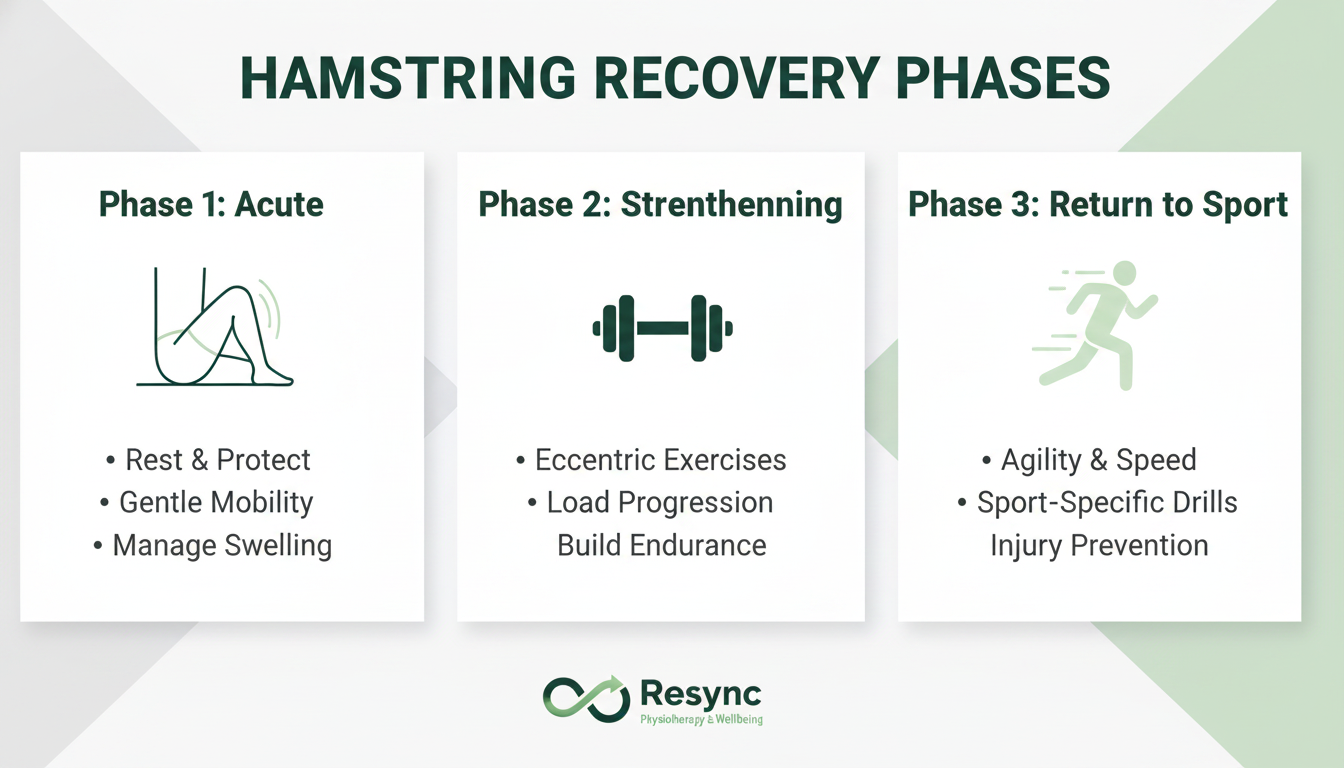
A successful comeback isn't about rushing back; it's about progressing intelligently through structured phases. Each stage builds upon the last, ensuring your hamstring is not only healed but also resilient enough for the demands of your sport. Think of it as a roadmap from the treatment table back to the pitch.
**Phase 1: The Acute Phase**
Immediately following the injury, the goal is to manage pain and inflammation while protecting the muscle from further damage. This doesn't mean complete immobility. We focus on relative rest and introduce very gentle, pain-free movements and activation exercises. This encourages blood flow, prevents the muscle from stiffening up, and lays the groundwork for proper healing without forming restrictive scar tissue.
**Phase 2: The Strengthening Phase**
Once the initial pain has subsided, we shift focus to rebuilding the muscle. This is the most critical phase for preventing re-injury. We introduce a progressive series of targeted exercises designed to increase the hamstring's strength and load capacity. This includes exercises that work the muscle as it lengthens (eccentric loading), which is vital for building resilience. We ensure the entire muscle chain, including the glutes and core, is functioning correctly to support the hamstring.
**Phase 3: The Return to Sport Phase**
This is where we bridge the gap between the clinic and your sport. Healing is one thing; being match-fit is another. In this final phase, we introduce sport-specific movements, drills, and plyometrics. For a footballer, this might involve controlled kicking and sprinting drills. For a runner, it would include building up mileage and incorporating speed work. The goal is to safely re-expose the hamstring to the exact forces and movements it will face in your chosen activity, building your confidence for a full, unrestricted return.
The Role of a Physiotherapist in Your Recovery
Navigating these phases alone can be confusing and risky. A specialist physiotherapist acts as your expert guide, providing a clear and personalised recovery plan. A thorough assessment is the first step, not just to confirm the hamstring strain, but to understand why it happened. Was it a strength imbalance? Poor running mechanics? Inadequate warm-ups? By identifying the root cause, we can treat the source of the problem, not just the symptoms.
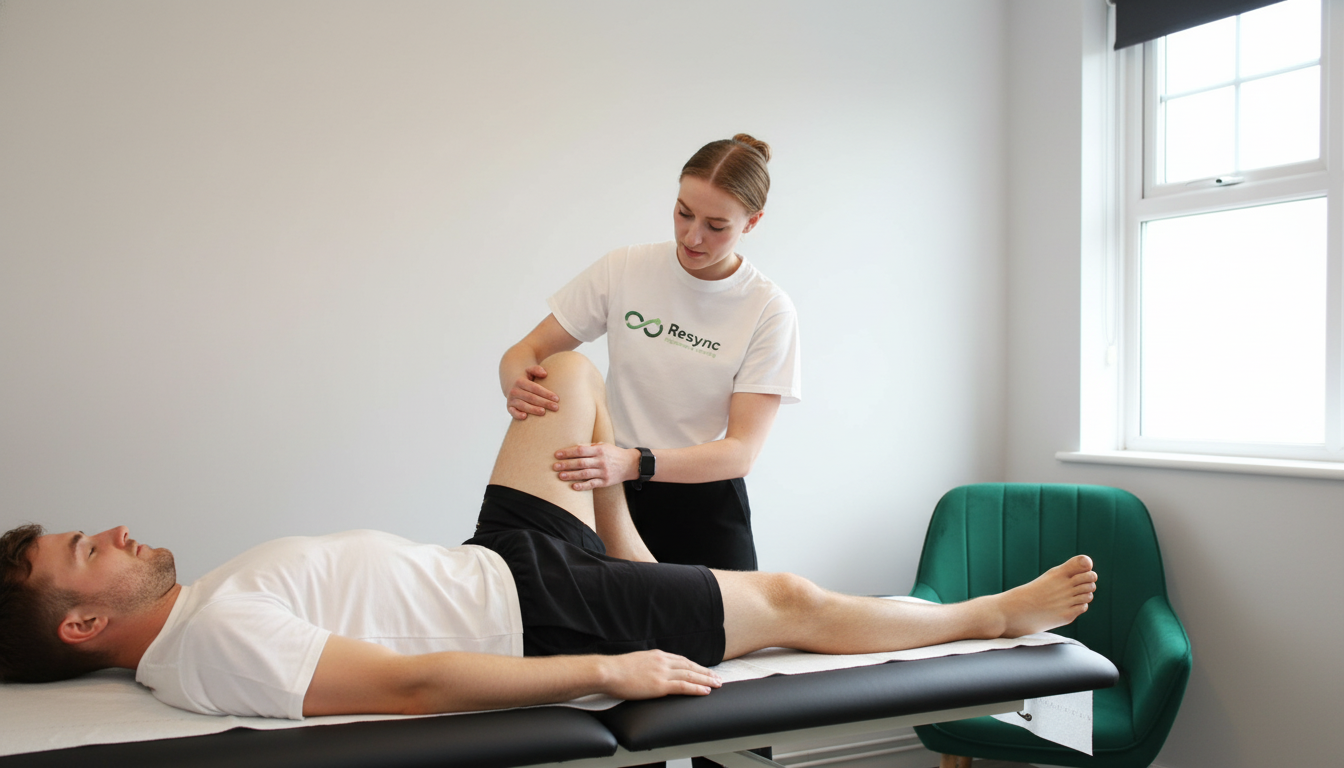
Based on this expert diagnosis, we create a tailored, evidence-based rehabilitation program that adapts as you progress. We provide hands-on treatment to alleviate pain and restore movement, guide you through your exercises with precision, and empower you with the knowledge to manage your body effectively. This structured approach removes the guesswork and gives you the confidence that you are doing everything right to ensure a safe and successful comeback.
Conclusion
A hamstring strain doesn't have to mean a long and frustrating period on the sidelines. With a structured, phased approach guided by expert hands, you can do more than just heal—you can come back stronger, more resilient, and with a greater understanding of how to prevent future injuries. Don't leave your recovery to chance or rely on rest alone. It’s time to take control of your comeback story.
Ready to get off the sideline and back to peak performance? Let our expert team in Balsall Common create your personalised roadmap to recovery. A comprehensive initial assessment is the first step to understanding your injury and building a plan that gets you back to the sport you love, safely and confidently. Book your assessment with Resync Physiotherapy today and start your journey back to full strength.